What is a Wamao? Yunnan's tiger-cat roof guardian
Drive through the old villages of Yunnan in southwest China and look up. On the ridge above many front doors sits a small clay creature with round staring eyes, a mouth opened impossibly wide and every tooth on show. Locals call it wamao (瓦猫), literally “tile cat”. It is not a pet and it is not a lucky cat. It is the house's guardian.
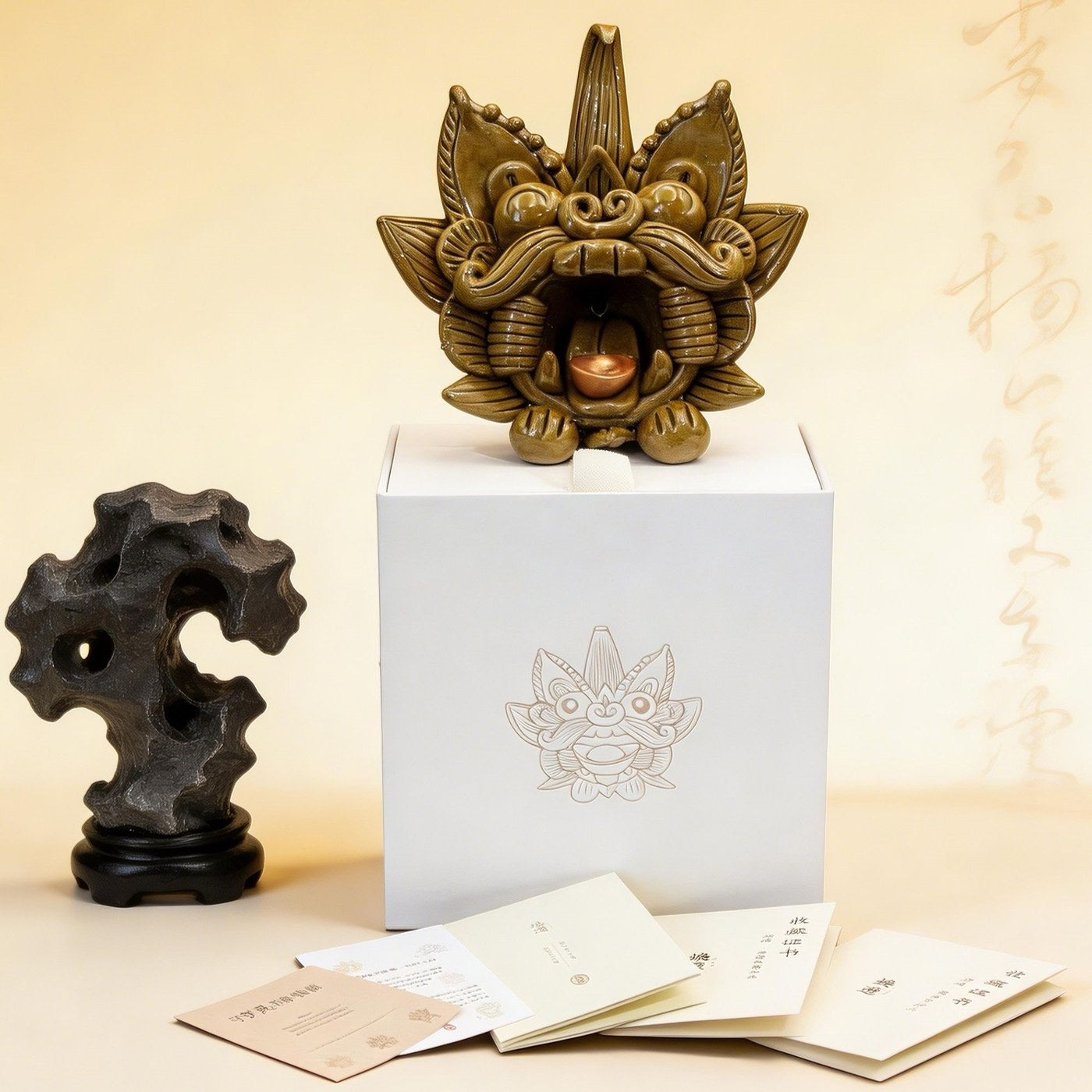
A cat with a tiger inside
Look at a wamao's forehead and you will often find the character 王, “king”, the mark Chinese tradition draws on the tiger. The Yi, Bai and Naxi peoples of Yunnan have honoured the tiger for a very long time. A real tiger is too fierce to keep at home, so the guardian was shaped as a cat: fierce enough to stand watch, small enough to sit on a roof.
What every part of the shape is for
- The open mouth is not for biting. In Yunnan custom the wamao swallows what should not come in: bad luck, stale air, and the “sha” of a road or a neighbour's roof corner pointing straight at the door.
- The hollow belly runs from mouth to tail. Misfortune is said to pass straight through, while good fortune stays inside.
- It faces outward, toward whatever is coming. A wamao never looks into the house.
- Five grains and five treasures: before a new wamao went up, the maker traditionally filled its belly with grain and with gold, silver, copper, iron and jade.
A thousand cats, a thousand faces
Every area shaped its own. Kunming and Chenggong cats are long-bodied and relaxed. Heqing cats in Dali grow a horn and come in well over a hundred forms. Chuxiong and Wenshan cats bare more teeth. The craft is recognised in Yunnan as intangible cultural heritage, and since 2022 the wamao has become one of the province's best-known symbols.
How a roof wamao is made
The originals use local red and yellow clay, rich in iron, fired at a low 700–800 °C. The body is thrown on a wheel, then the ears, nose, teeth and paws are pinched on by hand. Glazed cats turn tea-brown; bare ones stay brick-red or smoke-grey.
Where a wamao goes today
Concrete apartments have no ridge, so the guardian came indoors. The traditional rule still holds: let it face the way trouble would come from.
- Entryway: on a shelf or shoe cabinet, facing the front door.
- Desk or study: at the edge of the desk, looking toward the room's entrance.
- Shop counter: beside the till, facing the street door.
- On you: as a pendant, worn face-out at the chest.
For more on doorways, read our guide to feng shui front door guardians.
Guardians in this guide


Questions
Is a wamao a cat or a tiger?
Both. It is called a cat and shaped like one, but its forehead mark, fangs and job come from the tiger, which the peoples of Yunnan have long honoured as a protector.
Which way should a wamao face?
Outward. On the roof it faces the street or the road leading to the door, and indoors it should face the door or the room's entrance.
Is a wamao the same as a lucky cat?
No. The Japanese maneki-neko raises a paw to invite customers and money in. The wamao guards the home and swallows what should not come in. See wamao vs lucky cat.
Can I keep a wamao indoors?
Yes. Most wamao today live on desks, shelves and counters. Follow the same rule as the roof: give it a view of the way in.