Wamao vs lucky cat (maneki-neko): two cats, two different jobs
Most people outside Asia know one ceramic cat: the waving lucky cat in restaurant windows. Yunnan has a very different one. Both are about good fortune, but they do opposite jobs.
At a glance
| Lucky cat (maneki-neko) | Wamao (tile cat) | |
|---|---|---|
| From | Japan, Edo period | Yunnan, China, since the Ming dynasty |
| Pose | One paw raised, beckoning | Mouth wide open, fangs out |
| Job | Invites customers and money in | Swallows bad luck before it gets in |
| Where | Shop window or counter, facing the street | Roof ridge or entryway, facing outward |
| Character | Friendly, welcoming | Fierce, protective, a tiger in disguise |
The lucky cat
The maneki-neko comes from Japan and became popular in shops across East Asia, including Chinese restaurants abroad. A raised left paw is said to invite customers, a raised right paw money. Its colours carry different wishes.
The wamao
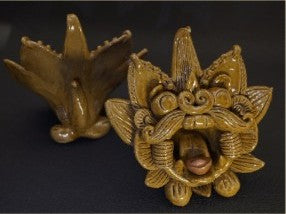
The wamao sits on Yunnan roofs above the front door. In local custom its open mouth swallows bad luck and its hollow belly keeps good fortune inside. Its forehead often carries the tiger's 王 mark: it is a protector first.
Can you have both?
Yes, and many shop owners like the pairing: one cat to invite, one to guard. If you want a guardian that also speaks to wealth, Jinxi holds an ingot in its mouth.
Guardians in this guide


Questions
Is the wamao Chinese and the lucky cat Japanese?
Yes. The maneki-neko is Japanese in origin; the wamao is a Yunnan, China, folk tradition.
Which is better for a shop?
They do different jobs. A lucky cat invites; a wamao guards. Some owners keep both.
Does the wamao wave?
No. Its power is in its open mouth, not its paw.
Is a wamao a good gift?
In Yunnan a wamao traditionally goes up before a family moves in, so it is a natural gift for a new home or business.